Home › FIRE & SMOKE DOOR INSPECTIONS
Fire and smoke door
inspections, clearly
documented.
Recurring inspections for occupied facilities and acceptance testing for new construction—with findings organized by opening and informed by applicable NFPA 80, NFPA 105, and AHJ requirements.
DHT · DHC · CFDAI
Specialized professional credentials
NFPA 80 & NFPA 105
Standards knowledge applied to scope
Door-by-Door Findings
Clear, organized inspection records
Tampa Bay-Based
Serving East Coast markets
INSPECTION SERVICES
Inspections for existing
facilities and new construction.
Start with the type of work in front of you. We’ll confirm the applicable openings, site access, schedule, and reporting scope before the inspection.
ANNUAL & PERIODIC INSPECTIONS
Recurring inspections for occupied facilities.
For healthcare, senior living, education, hospitality, and commercial facilities. Applicable fire and smoke door assemblies are evaluated, with observed findings documented by opening.
- Annual and scheduled inspection programs
- Door-by-door findings and deficiency records
- Documentation for maintenance and follow-up
ACCEPTANCE & NEW CONSTRUCTION
Inspections before project turnover.
For contractors, developers, and project teams. Newly installed assemblies are evaluated, with observed deficiencies documented before project closeout.
- Review of newly installed door assemblies
- Deficiencies documented before closeout
- Reporting for corrections and AHJ coordination
THE OPENING AS A SYSTEM
Each opening is reviewed
against the agreed
inspection scope.
The exact checks depend on the assembly and project requirements. AES confirms the applicable openings and documentation needs before field work begins.
- Door and frame condition
- Visible labels and identification markings
- Hardware, latching, and closing operation
- Glazing and vision-light components
- Field modifications and auxiliary items
- Available plans, listings, or manufacturer information
- Applicable ratings and identified requirements

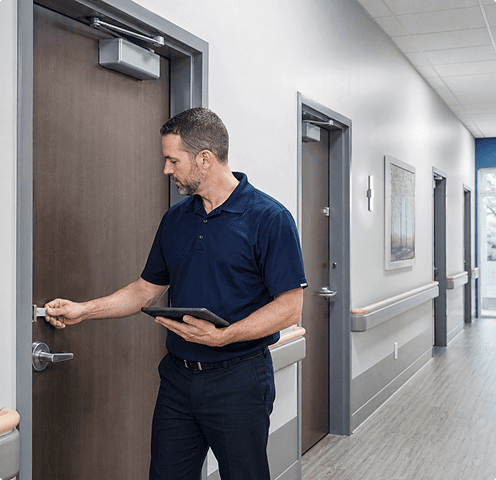
Findings are recorded
by opening,
not buried
in a general punch list.
- Closing or Latching
The door does not fully close, latch, or operate as expected during the applicable check.
- Labels and Markings
A label is missing, obscured, damaged, painted, or inconsistent with the opening being evaluated.
- Door or Frame Condition
Holes, dents, corrosion, damage, or other visible conditions are observed on the assembly.
- Field Modifications
An alteration, auxiliary item, or unverified preparation may require documentation or evaluation by the appropriate party.
- Hardware Condition
Hardware is missing, damaged, altered, incompatible, or not operating as intended.
- Gaps and Clearances
An observed clearance may require correction or further review against the applicable criteria.

ILLUSTRATIVE REPORT STRUCTURE
Opening inspection findings
OPENING
LOCATION
FINDINGS
STATUS
FD-021
East corridor · L2
Closer and latching
- Deficiency noted
FD-022
Stair B · L2
Clearance note
- Deficiency noted
FD-023
Service hall · L1
No issue noted
- Deficiency noted
- Illustrative structure only · exact fields and deliverables are confirmed during scoping.
WHAT YOU RECEIVE
Clear findings,
organized by opening.
Your report documents the agreed inspection scope, the openings evaluated, and the observed findings. It gives facility, construction, and AHJ stakeholders a clear record for review and follow-up.
- Agreed inspection scope
- Applicable visual and functional checks
- Findings organized by door or opening
- Observed deficiencies documented
- Reporting for facility, contractor, and AHJ review
FOR FIRE INSPECTORS & AHJs
Clear records for professional review.
AES can provide opening-level findings, scope context, and supporting documentation for facility, contractor, and AHJ coordination. Final interpretations and approvals remain with the applicable authority.
STANDARDS CONTEXT
Scope informed by the assembly,
occupancy, and applicable
requirements.
AES applies specialized knowledge of NFPA 80 and NFPA 105 to the agreed inspection scope. Healthcare work may also support documentation needs connected with CMS, The Joint Commission, and local Authorities Having Jurisdiction.
FIRE DOOR FIELD LABELING
A missing label doesn't
always mean
replacing the opening.
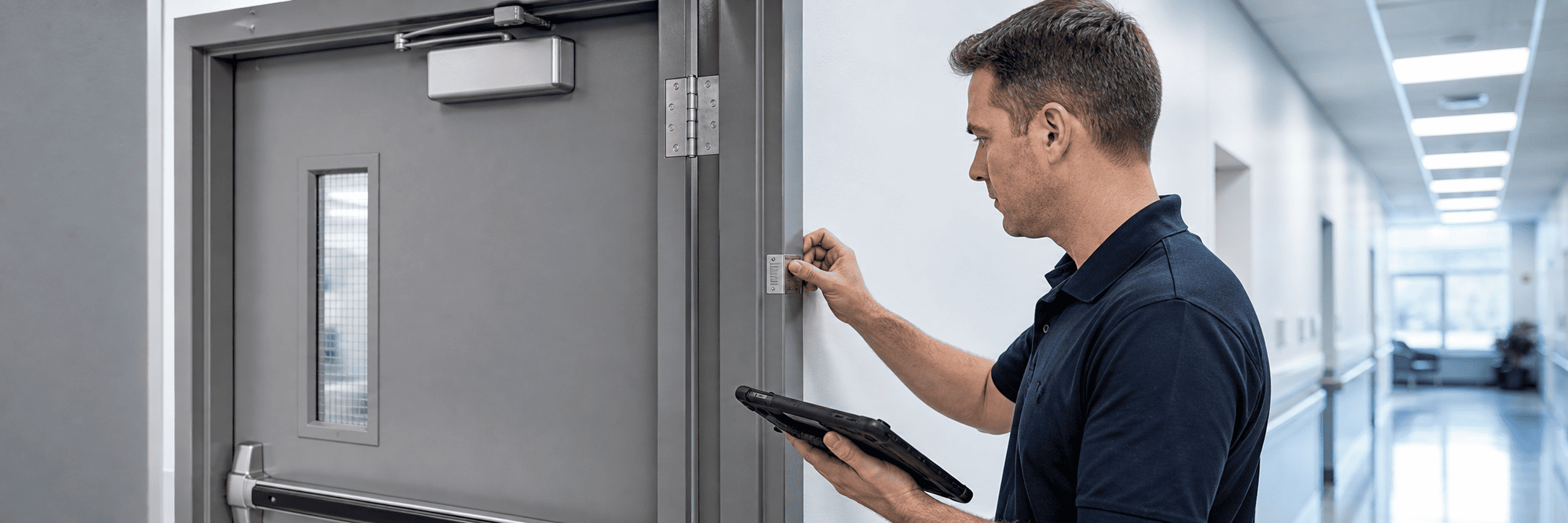
AES performs field-labeling for installed fire and smoke doors and frames. The evaluation determines whether an existing opening qualifies for on-site field labeling.
- Missing, removed or painted-over labels
- Incorrect labels or field-modified openings
- Written deficiencies and correction requirements
- Accredited field label applied when the opening qualifies
- Issue identified
- Evaluation coordinated
- Label applied if eligible
Eligibility is determined through evaluation. Not every opening qualifies for a field label.
What is the difference between an annual inspection and acceptance testing?
Annual and periodic inspections evaluate applicable openings in existing facilities. Acceptance testing evaluates newly installed assemblies before project turnover or closeout.
Do you inspect both fire and smoke door assemblies?
Can inspections be completed in occupied facilities?
Does an AES report guarantee AHJ approval?
What information helps AES prepare a proposal?
FREQUENTLY ASKED QUESTIONS
Questions
before
you schedule.
A few practical details can help you prepare. AES will confirm the affected openings, available records, site access and scheduling before the evaluation.
Still unsure what you need?
REQUEST AN INSPECTION
Tell us about your
facility or project.
Share the property location, facility or project type, approximate opening count, inspection need, and target timing. AES will review the request and follow up to confirm the appropriate scope and next steps.
- Florida-based · Serving projects across the East Coast
- DHT · DHC · CFDAI
- NFPA 80 · NFPA 105
Inspection request
Your information will only be used to respond to your request.